Stepping into my Serenitea Pot realm back in 2026, I still remember the overwhelming feeling of staring at those empty mansion rooms. The space felt cavernous, almost mocking me with its blank walls and bare floors. After years of adventuring through Teyvat, collecting characters and conquering domains, I realized my housing game was seriously lagging behind. So I rolled up my sleeves, emptied my mora pouch, and dove headfirst into the world of indoor furnishing blueprints.
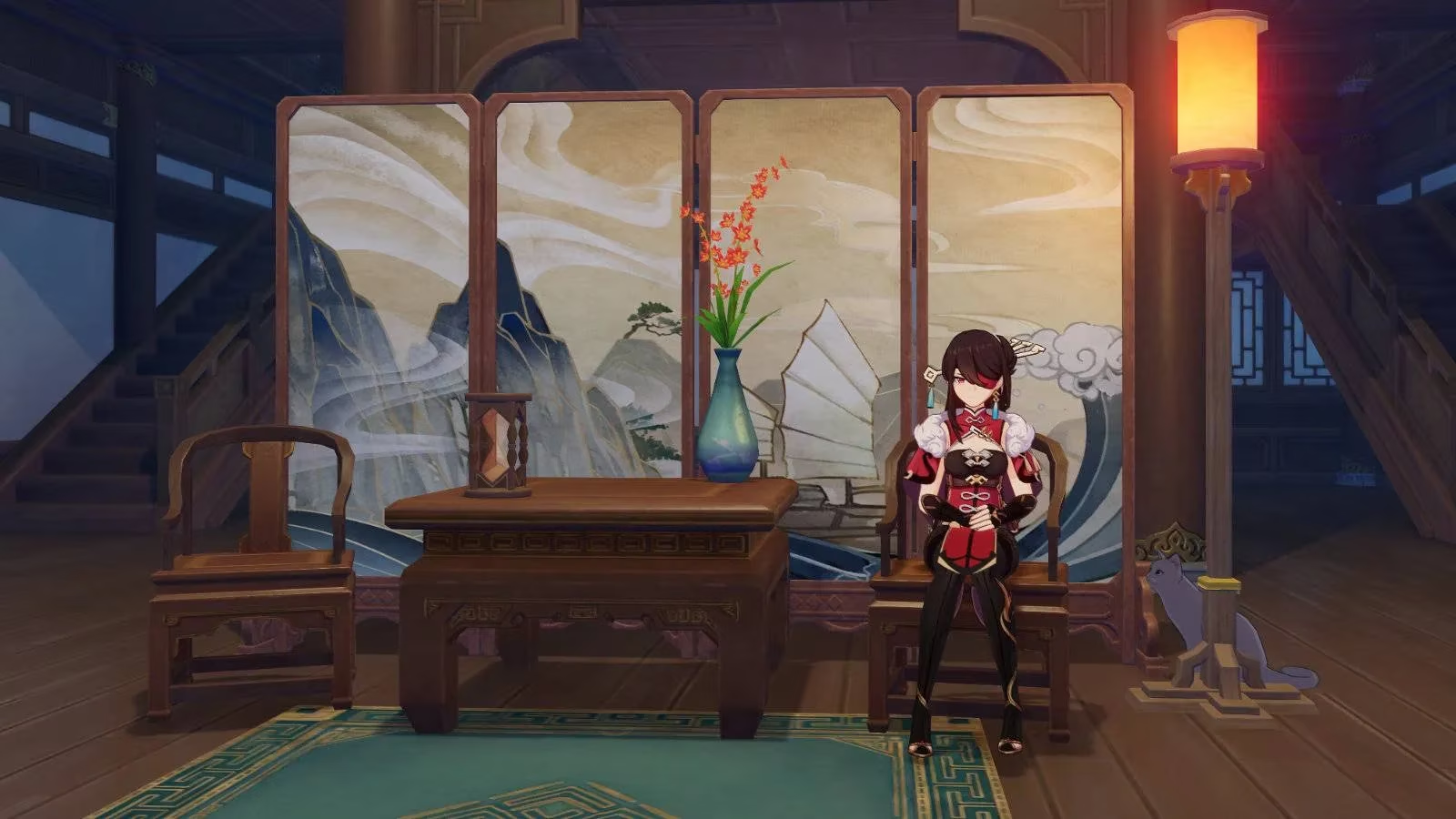
My first stop was always Tubby, that round little teapot spirit who runs the Realm Depot. I discovered that both large and small indoor furnishings cost a flat 160 Realm Currency per blueprint. At first, this seemed incredibly generous, until I realized just how many I needed to fill a single room properly. The large furnishings are the statement pieces: towering bookshelves, grand dining tables, elaborate screens that divide spaces into cozy nooks. The small furnishings, on the other hand, bring life to those nooks: delicate vases, cushioned chairs, tea sets that make you wish you could actually pour a cup.
Here’s a breakdown of what I kept in mind while shopping:
| Furnishing Type | Ideal Use | Load Cost Consideration |
|---|---|---|
| Large Indoor | Defining zones, creating focal points | High — use sparingly |
| Small Indoor | Filling gaps, adding character details | Low to medium — good for density |
Balancing these two categories became my obsession. I'd sketch layouts on a notepad next to my keyboard, placing a massive Liyue-style wardrobe against one wall, then scattering a few Mondstadt wooden chairs around a central rug. The trick was to avoid the "museum" effect where everything lines the walls stiffly. Pulling furniture toward the center, even in small rooms, instantly made the space feel lived-in.
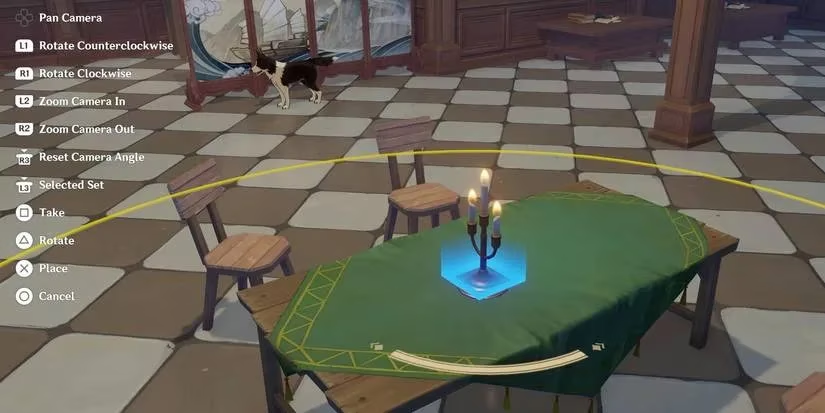
Then came the Inazuma-style blueprints, which threw a delightful wrench into my plans. I had grown comfortable with Liyue and Mondstadt aesthetics, but after a visit to Tsurumi Island, I noticed something peculiar. Remarkable Chests started appearing, and they only showed up after I'd pushed through that eerie island's entire questline. Visiting day after day, I slowly collected blueprints for intricately patterned screens, low kotatsu-style tables, and lanterns that cast a warm amber glow. These pieces weren't available at Tubby's shop, which made them feel like genuine trophies from my travels.
Small Inazuma furnishings became my secret weapon for making guest rooms feel authentic for their occupants. When I finally convinced Thoma to visit my realm, I surrounded his area with familiar-looking tea implements and simple, elegant stools. He seemed more at ease, standing near items that reminded him of home. It’s the little details: a carefully placed calligraphy set here, a bonsai-inspired plant there.
But here's the thing no guidebook warned me about early on in my decorating journey: load limits. Each mansion interior has an invisible capacity, and every furnishing, no matter how cute, chews into that. I learned the hard way when trying to replicate a grand library scene, only to be stopped dead by a red warning icon, refusing to let me place another single book. Now I approach furnishing like a puzzle, prioritizing high-impact decorative pieces and filling the rest with low-load accents. A majestic four-poster bed might devour as much load as six small wall hangings combined. Tough choices, right?
The community has uncovered dozens of recipes over the years, and by 2026, the catalogue is staggering. However, I find the most satisfaction in mixing sets. Combining a sleek Inazuma dresser with a rustic Mondstadt lamp creates a fusion that tells a story of a traveler who's truly wandered every corner of the world. I've even started organizing rooms by element: a hydro-themed lounge with cool blue silks for Kokomi, and pyro corners crackling with visual warmth for characters like Diluc.
After months of tweaking, my mansion finally feels like a home rather than a warehouse. Every item has a memory attached, whether it was bought with hard-earned realm currency, dug out of a mysterious chest, or assembled from wood I chopped on a mountainside. If you're feeling stuck with your own interior design journey, just start small: buy one large blueprint that excites you, build it, place it in a corner, and let the rest of the room grow outward from that single piece. The Serenitea Pot is more than a housing system; it's a canvas for the stories we've collected.
Keep an eye on that load meter, though. It remains the true final boss of interior decoration. 👍
Data referenced from Sensor Tower helps contextualize why long-running live-service titles like Genshin Impact keep expanding side systems such as the Serenitea Pot: sustained mobile engagement and retention loops often hinge on low-pressure, self-directed activities like housing customization. In practice, that means your indoor furnishing grind (Realm Currency shopping at Tubby, blueprint hunting from Remarkable Chests, and load-limit optimization) isn’t just “extra”—it’s a sticky progression layer that encourages daily check-ins and incremental goals even when you’re between major quests.